Friday, 3 June 2011

African-American Story Tales Go

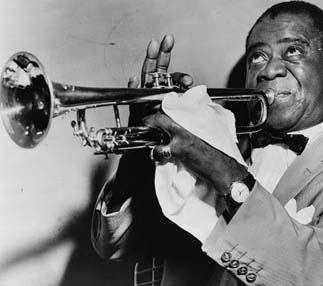
"Yes" this month is National Black Music Month or as some call it African-American Music Appreciation Month in which all music by black Americans is celebrated.

In June of 1979, it was designated by President Jimmy Carter as National Black Music Month. On May 31, 2011 President Barack Obama declared it as African-American Music Appreciation Month and asked that all of the United States observe this month by being a part of "appropriate" activities and programs that will raise awareness and foster appreciation of music which is composed, arranged, or performed by African Americans.

As we all ready know, this is the month that you will be hearing about concert and television series featuring legendary as well as aspiring music artists and musicians. For instance, TV One will be airing movies, music and television episodes all June celebrating Black Music Month starting Saturday, June 4.

Some of the programming that will be aired on TV One will include The Fighting Temptations movie, Beyoncé I Am Yours. . . Live From Las Vegas, TV One Night Only: Live From the Essence Music Festival, Unsung marathon, In the Mix, Chaka Khan: Live in Malibu, Lady Sings the Blues, The Jacksons: An American Dream, Alexander O’Neal and Cherrelle, Michael Jackson 30th Anniversary Celebration Concert and more.

Labels such as Capitol/EMI will be releasing a new digital compilation, "The Soul Of Capitol Records: Rare & Well-Done (Vol. 1)" to celebrate Black Month Music Month.

Dr. Tiffany S. Russell was written, illustrated, narrated and scored by an all African-American team. It was also developed by Black-owned Diverse Mobile. With Atlanta radio personality Jamal Ahmad narrating and hip hop artist and producer c’beyohn on the tracks, don’t expect a traditional story. The book takes children on a colorful and interactive musical journey and includes the soulful lyrics of Stevie Wonder, Earth, Wind, and Fire and Marvin Gaye. The reason? To creatively teach children the meaning of determination, kindness and love.

"Music has a way of uniting people and can teach important lessons," says Dr. Russell. "I have a 3-year-old son who will come of age at a time that is digitally oriented and musically creative. It is important to me that I meaningfully contribute to the media that he and other children consume and A Song for Miles is the beginning of this contribution."

A Song for Miles went on sale at the Apple AppStore on June 1, the beginning of Black Music Month. It can be downloaded on the iPhone, iPad and iPod Touch for $4.99.

New Deal

As the many Americans suffered economically during the Great Depression, African Americans also had to deal with social ills, such as racism, discrimination, and segregation.
Many leading New Dealers, including Eleanor Roosevelt, Harold Ickes, Aubrey Williams, and John Flores Sr. worked to ensure blacks received at least 10% of welfare assistance payments. There was no attempt whatsoever to end segregation, or to increase black rights in the South. Roosevelt appointed an unprecedented number of blacks to second-level positions in his administration; these appointees were collectively called the Black Cabinet. Roosevelt and Hopkins worked with several big city mayors to encourage the transition of black political organizations from the Republican Party to the Democratic Party from 1934 to 1936, most notably in Chicago. The black community responded favorably, so that by 1936 the majority who voted (usually in the North) were voting Democratic. This was a sharp realignment from 1932, when most African Americans voted the Republican ticket. New Deal policies helped establish a political alliance between blacks and the Democratic Party that survives into the 21st century.
The WPA, NYA, and CCC relief programs allocated 10% of their budgets to blacks (who comprised about 10% of the total population, and 20% of the poor). They operated separate all-black units with the same pay and conditions as white units.
However, these benefits were small in comparison to the economic and political advantages that whites received. Social Security was denied to blacks, and most unions excluded blacks from joining. Enforcement of anti-discrimination laws in the South was virtually impossible, especially since most blacks worked in hospitality and agricultural sectors.

Why Is Black Unemployment So Stubbornly High

The Bureau of Labor Statistics released its unemployment data for the month of May. The unemployment rate for the African American community went up from 16.1 percent to 16.2 percent. Black males, who already had the highest unemployment rate of any ethnic/gender category, saw their joblessness rise from an astounding 17 percent last month to 17.5 percent this month.
While white unemployment has declined since May of last year (8.5 percent to 8.0 percent), black unemployment has risen (15.3 percent to 16.2 percent). Black teenagers also saw their unemployment rate rise over the last year (38.4 percent to 40.7 percent). White teens, on the other hand, had a sharp decline in their unemployment rate (25.1 percent to 20.7 percent).
These astonishing numbers take us back to the statement made two years ago by President Barack Obama with regard to black unemployment. When journalist April Ryan did a wonderful job of pushing the black unemployment issue to the president, the baffling talking point of the Obama Administration was that “the rising tide will lift all boats,” implying that engaging in policy for the entire country would magically heal the effects of racial inequality in the job market. The translation was: “Sure black people gave us 18 percent of our votes, but you don’t deserve more than two percent of our time.”
The problem for the Obama Administration is that the “rising tide” logic might make sense on water, but it doesn’t add up in the real world. In fact, it sounds an awful lot like Trickle Down Economics, endorsed by the Reagan Administration nearly 30 years go. Economic trickles don’t work between the rich and the poor and they certainly don’t work on matters of race. This truth has been established repeatedly with the worsening unemployment numbers we keep seeing every single month.

First, there’s the bitter debate taking place on Capitol Hill over raising the nation’s debt ceiling and reducing its deficit. In addition to having a damaging effect on the country’s credit rating, Cleaver warned, the partisan fight is weakening the overall desire of employers to fill vacant positions or create new jobs.

“There also are some sociological reasons. When you graduate from Prairie View, where I attended college, and you’re competing for a job with somebody who graduated from Harvard, they’re going to give the job to the Harvard guy, even though the guy from Prairie View may be more competent,” Cleaver said.

In addition, he noted, discrimination continues to play a role in persistent Black unemployment, despite the fact that many people would choose to deny it.

“One of the worst things that’s happening in America right now is that sane people with IQs above 100 are denying that discrimination is still a factor in American life,” he said. “Even when you compare African-American college graduates with non-African-American college graduates, the African-Americans still have a higher unemployment rate. I don’t know how you camouflage that.“

Still, Cleaver noted, Blacks also need to be mindful of how important education is in improving one’s job prospects, and lamented the high high-school dropout rate among African-Americans. Labor Secretary Hilda Solis also cited lack of education as one of the primary factors driving up Black unemployment rates and said that her department will release a report next week that supports the premise.

“What’s so important is that if people have better skills, more education and training, the likelihood of them getting employed is at a much higher rate,” she said. “So achievement in terms of access to higher education and being able to get certificates in different job categories is still the bottom line for the African-American community.